Quick Answer: How to Lower Alkalinity in Your Hot Tub Without Breaking the Chemistry
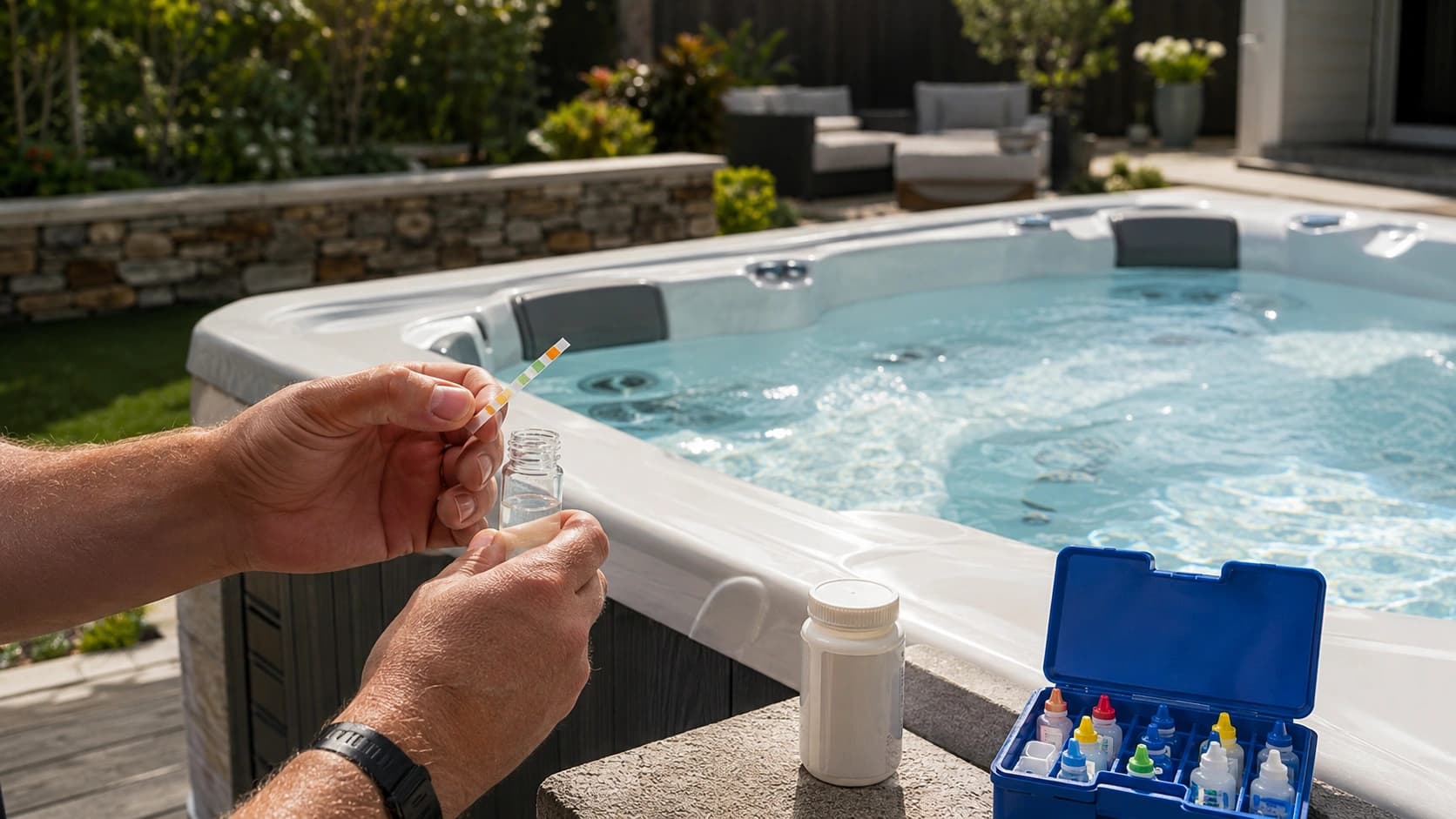
How to lower alkalinity in hot tub water is the single most-asked water chemistry question we get at the Hamilton showroom. The short version is the same answer for every variant of the question: how to lower alkalinity in a hot tub, how to decrease alkalinity in hot tub, how do you lower alkalinity in a hot tub, how to lower the alkalinity in a hot tub, how to lower hot tub alkalinity. Test first. Use a pH and alkalinity reducer product (sometimes labelled spa-down or pH down) according to the dosing instructions on the bottle. Run the pump on circulation for the time the label specifies. Wait. Retest. Repeat in small steps if needed.
The full answer is below: why alkalinity matters, why you should not eyeball it, why pH and alkalinity move together, and when to stop dosing and bring a water sample to our Hamilton showroom for a free test instead. The single most important rule is the one that takes one sentence: do not skip the test, and do not pour two products in at once.
4 numbers
pH, alkalinity, sanitizer, calcium hardness
Test first
Never dose blind
3-4 months
Typical drain and refill rhythm
Free
In-store water testing at our Hamilton showroom
Visit the Hamilton Showroom
1171 Upper James St Unit 9A, Hamilton. Walk in any time - no appointment needed. Free delivery across Hamilton and the GTA.
The Four Numbers That Actually Matter
Hot tub water chemistry has four moving parts. Test these every time, in this order, and most issues sort themselves out before they need a service call.
Sanitizer. Bromine or chlorine, in the manufacturer-recommended range. This is what kills bacteria. Without it, the rest does not matter.
pH. A measure of how acidic or basic the water is. Most spas target a pH between roughly 7.4 and 7.6. Outside that band, sanitizer becomes less effective and components start to wear faster.
Total alkalinity. A buffer that keeps pH stable. Think of alkalinity as the cushion that absorbs minor changes before they show up as pH swings. Most spas target total alkalinity in the 80 to 120 ppm range, but always confirm the target with your tub manufacturer or test-strip instructions.
Calcium hardness. How much calcium is in the water. Too low and the heater element starts pulling calcium out of itself, which corrodes equipment. Too high and you get scale on the shell and jets.
There are a couple of secondary numbers (total dissolved solids, stabilizer / cyanuric acid) that matter eventually, but they are mostly handled by drain and refill rather than by adding chemicals. We touch on those further down.
Total Alkalinity: Why It Goes First
If you only learn one thing about hot tub chemistry, learn this: alkalinity controls pH stability, and pH controls how well your sanitizer works. Adjust alkalinity first, pH second, sanitizer last. The reason is mechanical: alkalinity is a buffer. Adjusting pH while alkalinity is wildly out is like tuning a guitar while someone keeps turning the peg. The pH reading you take will not stick because the buffer underneath is not in place.
General target ranges (always confirm with your specific tub manual and the product label you are using):
- Total alkalinity: typically 80 to 120 ppm
- pH: typically 7.4 to 7.6
- Sanitizer: per the system you use, on the schedule the manufacturer recommends
If alkalinity is high, pH will tend to drift up too, and your sanitizer will become less effective. If alkalinity is low, pH will swing wildly with every soak, and you will end up dosing constantly. Get alkalinity into range first and the rest of the chemistry becomes much more predictable.
How to Lower Alkalinity in a Hot Tub
Lower alkalinity in hot tub water by reducing it in small, label-controlled steps. The product to reach for is a pH and alkalinity reducer (sodium bisulphate or muriatic-acid-based), often labelled spa-down or pH/alkalinity down. The same workflow handles every variant of the question (how to reduce alkalinity in hot tub, how to decrease alkalinity in hot tub, how to lower hot tub alkalinity):
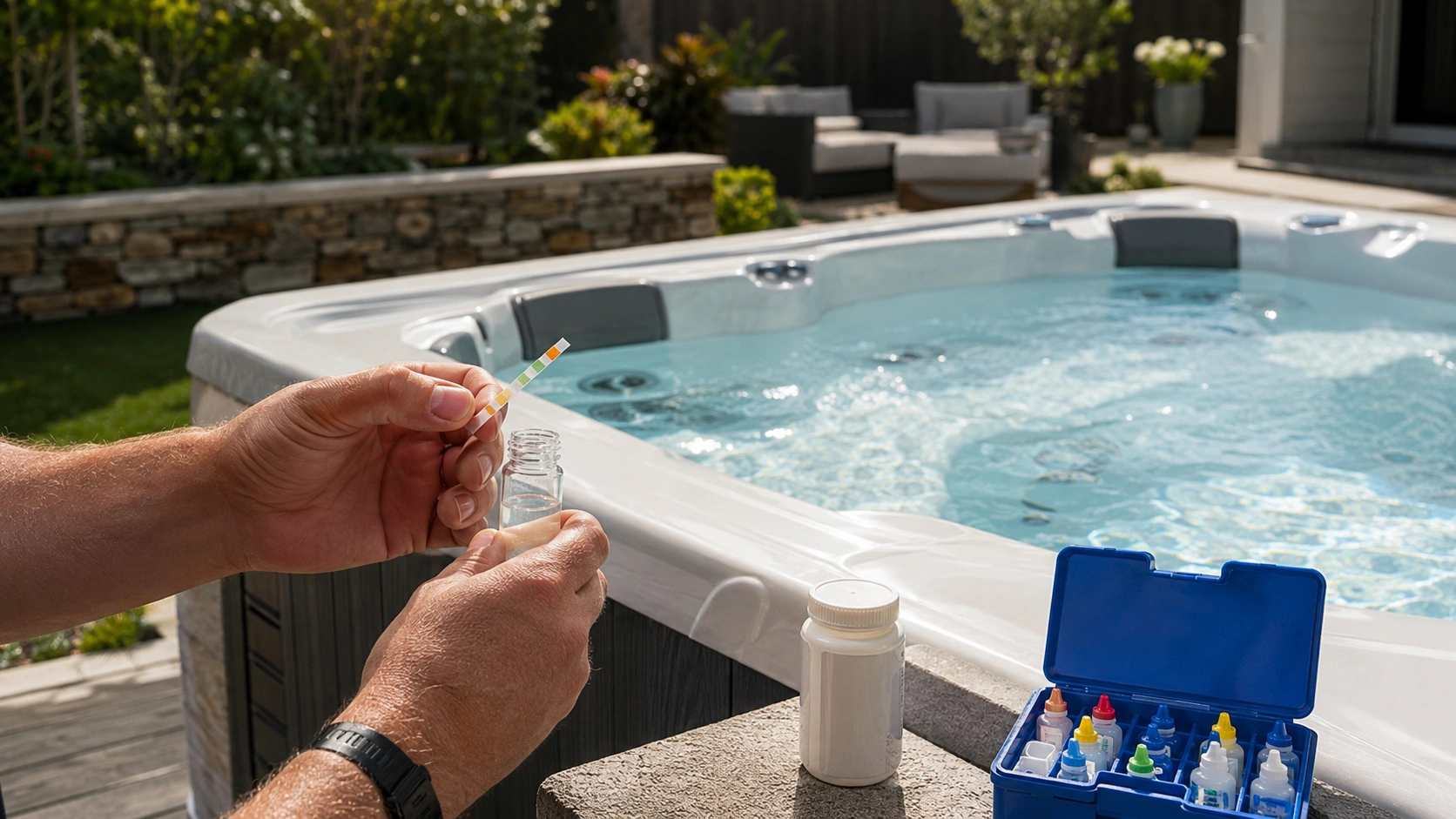
- 1.Test the water with a strip or liquid kit and record the reading.
- 2.Read the dosing instructions on the bottle of the product you actually have in front of you. Different brands use different concentrations and that is why we do not publish exact dosing on this guide.
- 3.Add the product slowly with the pump running on circulation. Do not pour it on top of a closed jet outlet or directly on the shell.
- 4.Wait the time the label specifies (often 15 to 30 minutes of circulation).
- 5.Retest. If alkalinity is still high, repeat in small steps. Going down in stages is much safer than over-correcting.
- 6.Re-test pH afterwards. Lowering alkalinity often pulls pH down too, which means you may need to raise pH next.
Do not pour the entire bottle in at once. Do not eyeball the dose. Do not add another chemical (sanitizer, shock, anything else) at the same time. Each chemical goes in by itself, with the pump running, on its own cycle. If alkalinity is far above range and the product is not catching up after two careful rounds, stop. The water might need a partial drain and refill instead of more chemical. We cover the drain threshold further down. You can also bring a 500 ml sample to our Hamilton showroom for free in-store water testing and we will tell you exactly what the water needs.
How to Raise Alkalinity in a Hot Tub
If your test shows total alkalinity below the target range, the workflow is the mirror image of the previous section, with a different product. Use a total alkalinity increaser (sodium bicarbonate-based, often labelled alkalinity up).
- 1.Test and record the current reading.
- 2.Read the dosing instructions on the specific bottle you have.
- 3.Add slowly with the pump running on circulation.
- 4.Wait the label-specified circulation time, typically 15 to 30 minutes.
- 5.Retest. Repeat in small steps if needed.
The same rules apply: one product at a time, pump running, follow the label, no eyeballing. Raising alkalinity also tends to raise pH a little, so plan to retest pH and adjust afterwards if needed. We stock alkalinity increaser, alkalinity reducer, and starter kits at our chemicals section.
pH: What Happens When You Lower Alkalinity (and How to Raise It)
Lowering alkalinity often pulls pH down with it. That is normal and expected. Once your alkalinity reading is in range and you have given the water a full circulation cycle, retest pH.
If pH is below the target band (typically below 7.4), use a pH increaser product (sodium carbonate, often labelled pH up). The workflow is the same as alkalinity adjustment: test, label-controlled dosing, pump running, wait, retest. The reason we keep saying that is because it is the only safe way to do this without specialist equipment.
A common question we get is how to raise pH in hot tub water without raising alkalinity at the same time. The honest answer is that the two are linked at the chemical level and pH up products will lift alkalinity slightly along with pH. The trick is to make small adjustments, retest, and resist the urge to over-correct. If your readings keep swinging week to week, the problem is usually that alkalinity is not yet stable in its proper range. Get alkalinity right first, and pH gets much easier to manage.
If pH is too high, the same alkalinity reducer (pH/alkalinity down) handles the job. Test, label-controlled dose, circulate, retest.
The Right Order to Add Hot Tub Chemicals
We get asked the order question a lot, in part because some forums online give bad answers. Here is the safe order for routine adjustments, drawn from how our service team handles every visit:
- 1.Alkalinity first. Get total alkalinity into the manufacturer-recommended range. Wait. Retest.
- 2.pH second. Adjust into the target band. Wait. Retest.
- 3.Calcium hardness if needed. This usually only changes after a fresh fill. Adjust separately.
- 4.Sanitizer last. Test sanitizer level, top up per the system and label.
- 5.Shock or oxidizer if needed. Weekly, after heavy use, or to clear chloramines. Add separately, with the pump running, with the cover off until the product specifies otherwise on the label.
A few hard rules that apply to all of the above:
- Never combine two chemicals in the same scoop or dose two products in the same cycle. Each one goes in by itself, with the pump running on circulation, with time between additions for a full retest.
- Always add chemicals to water, never water to chemicals.
- Pump must be running when you dose. If the pump is off, the chemical sits in one spot and concentrates, which can damage the shell or the equipment.
- Cover off during dosing so the chemicals can off-gas as the label specifies.
- Read the actual bottle in front of you. Brands and concentrations vary. The dosing on a competitor's bottle is not the dosing on yours.
Visit the Hamilton Showroom
1171 Upper James St Unit 9A, Hamilton. Walk in any time - no appointment needed. Free delivery across Hamilton and the GTA.
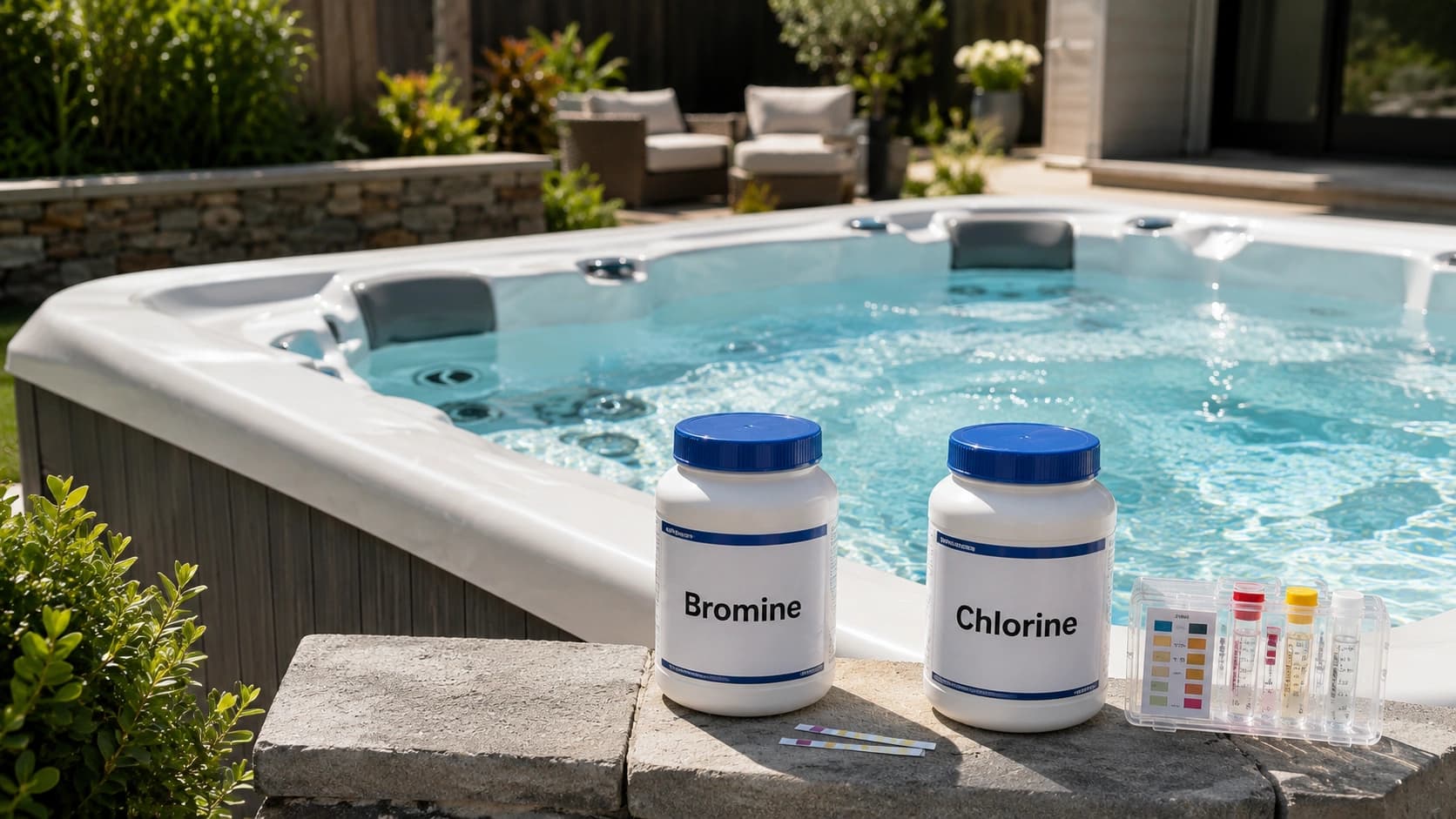
Bromine or Chlorine for Hot Tubs?
The bromine vs chlorine hot tub question is a real one and gets a deeper treatment in our dedicated bromine vs chlorine hot tub guide. The short version is that bromine is generally preferred for hot tubs because it stays stable at hot tub operating temperatures (38 to 40 degrees Celsius), while chlorine breaks down faster in heat. Bromine also remains effective across a wider pH range and has a less harsh smell. Some owners prefer chlorine for its slightly stronger immediate kill, but it requires more frequent dosing in a heated spa.
For the question of bromine or chlorine for hot tubs more broadly, both are valid. The right answer depends on your tub, your sanitizer system (some tubs are configured for one or the other), and how often you use the spa. We carry bromine tablets for hot tubs, bromine granules, chlorine granules, and salt chlorine systems at our chemicals section. If you are not sure which system fits your tub, bring a water sample and your tub model to the showroom and we will walk through the options in person.
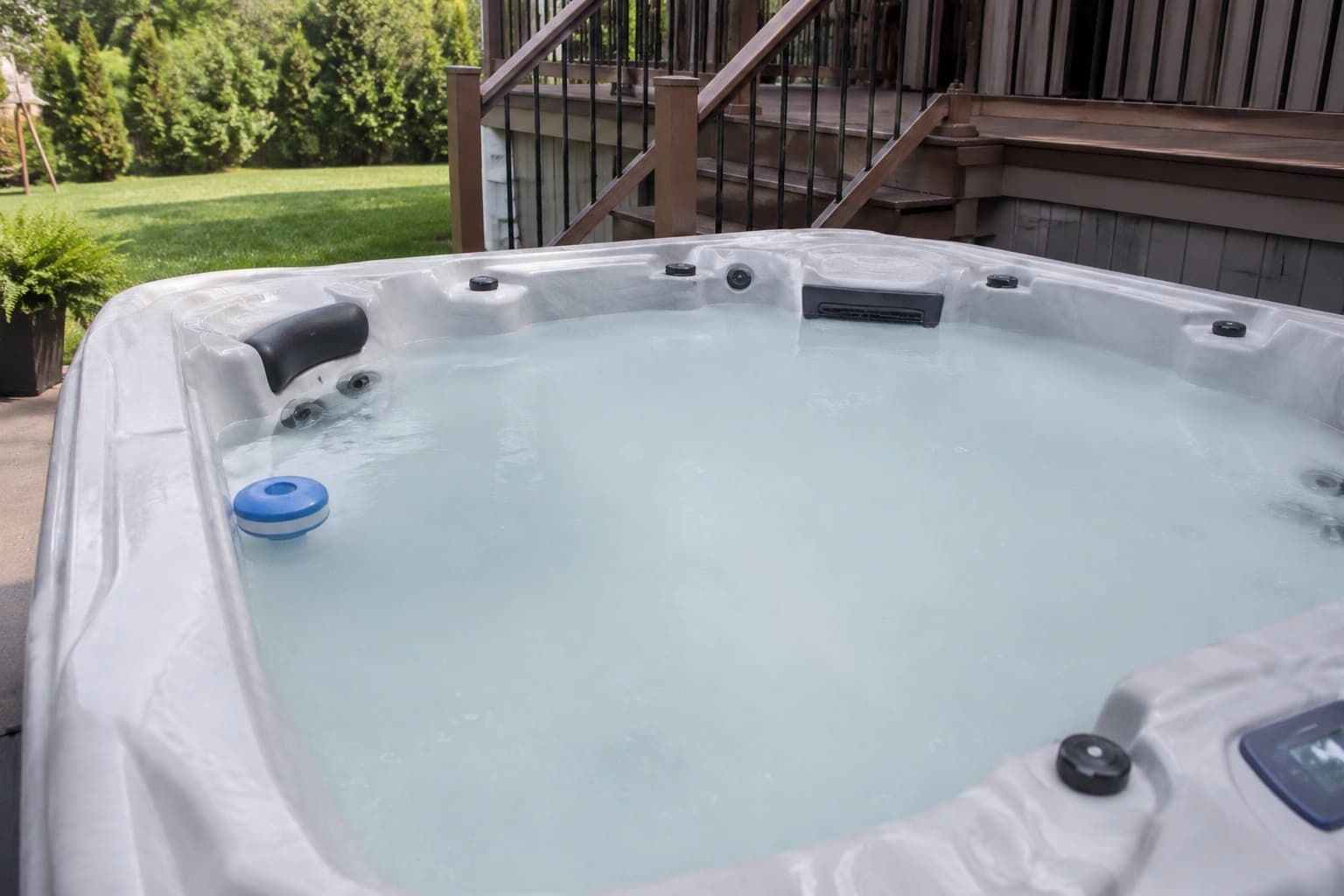
Why Your Hot Tub Water Looks Cloudy
Cloudy hot tub water is almost always one of four things, and chemistry usually catches three of them.
- 1.Low or imbalanced sanitizer. The most common cause. Bacteria, biofilm, and organic matter build up faster than the sanitizer can keep up.
- 2.pH or alkalinity out of range. When pH is high, calcium can precipitate out as cloudiness. When alkalinity is way off, the water becomes a poor environment for sanitizer to work.
- 3.Calcium hardness too high. Soft water leaching calcium back out, or hard water leaving scale-like cloudiness, both look similar in the moment.
- 4.A dirty or compressed filter. No amount of chemistry will fix water that cannot move through a working filter. If your filter is overdue for a soak or a replacement, that is often the actual problem.
The order to investigate is: check sanitizer level, balance pH and alkalinity, rinse or soak the filter, drain and refill if everything else has been tried. For the deeper diagnosis sequence, see our dedicated cloudy hot tub water guide. For most cases the chemicals section plus a free in-store water test will get you back to clear water in 24 to 48 hours. If the water clears briefly and then goes cloudy again within a few days, our maintenance service can do a full visit and figure out what the routine is missing.
“Cloudy hot tub water is almost always one of four things, and chemistry usually catches three of them. 1”
When More Chemicals Will Not Fix It
There is a point where adding more chemicals stops working. The reason is total dissolved solids: every chemical you add (and every soak) leaves something behind in the water. Over time, dissolved solids climb. Once they are high enough, water stops responding the way it used to. You add alkalinity reducer and the reading barely moves. You add sanitizer and it disappears in hours. The chemistry is not broken; the water is just full.
For typical residential use (two to four people, three to four soaks per week), the right cadence is to drain and refill the spa every 3 to 4 months. If you are dosing constantly and not getting stable readings, the answer is usually a fresh fill, not more chemicals. Our maintenance service handles drain and refill (full drain, line flush, surface clean, refill, opening chemistry, bring-up to operating temperature) as a single appointment. We also stock drain and refill kits at the chemicals section if you prefer to handle the job yourself.
A related warning: if water symptoms keep recurring no matter what you do, the issue might not be chemistry at all. A failing pump, a dirty heater element, a small leak that introduces oxygen, or a tripping GFCI can all create symptoms that mimic chemistry problems. If routine adjustments are not solving it, see our repair service for a diagnostic visit. Chemistry alone does not fix hardware faults.
When to Stop DIY and Bring Us a Water Sample
Free in-store water testing is the cheat code most owners do not know about. Bring a 500 ml sample of your tub water in any clean container (drawn from elbow-depth, not from the surface) to our Hamilton showroom. We run a multi-panel test, print the reading, and walk you through what to add and in what order. The visit takes a few minutes, no appointment needed, and there is no purchase requirement.
Good times to bring in a sample:
- After a fresh fill, to confirm opening chemistry before you start sanitizer dosing
- When readings are not making sense (you adjusted alkalinity twice and the number is still drifting)
- Before a drain and refill, to know if a partial drain might be enough
- Once a month as a sanity check against your test strips, which can drift if stored in heat or humidity
- Whenever the water just feels off and you cannot pinpoint why
If you are mostly DIY and want supplies to handle the routine yourself, the chemicals section covers what you need. If you want someone else to handle the work, our maintenance service does the full visit. New owner and not sure where to start? Browse the hot tub buying guide or check the main FAQ for broader hot tub questions.
Visit the Hamilton Showroom
1171 Upper James St Unit 9A, Hamilton. Walk in any time - no appointment needed. Free delivery across Hamilton and the GTA.
Hamilton-Specific Notes for Hot Tub Water Care
A few practical notes for owners in Hamilton and the surrounding GTA west.
Local water source matters. Tap water across Hamilton, Burlington, Oakville, Ancaster, Stoney Creek, Dundas, and Grimsby varies in hardness and mineral content depending on the source. The general workflow above does not change, but the starting point your refill water hits the test panel at can vary. After a drain and refill, expect to spend a little extra time on the opening chemistry round.
Ontario winters change the demand. In winter, the cover stays on more, evaporation slows, and bather load typically drops. Sanitizer demand can drop with it. In summer, the opposite: open use, more swimmers, and chlorinated demand climb. Adjust the testing cadence with the season. If you are running through winter, see our winterization vs year-round running guide for the seasonal trade-offs.
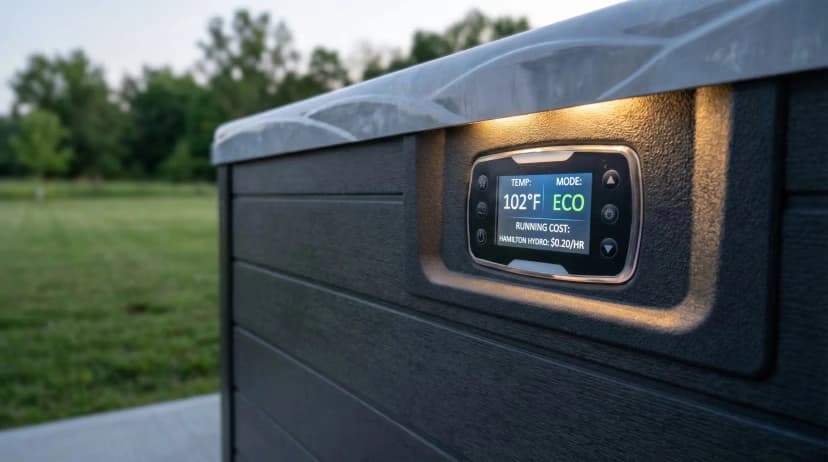
Energy and chemistry are connected. A clean filter and a good cover both reduce sanitizer demand because the system has less work to do. The Hamilton hydro running cost post covers the energy side.
Local supply is two minutes from your test result. When the panel says you need alkalinity down, having a Hamilton showroom on Upper James St means you can drive over, grab the right product, and have it in the tub within an hour. That is the underrated part of buying chemicals locally rather than online: the routine stays short. Free in-store water testing comes with every visit. Bring a sample any time we are open.
Frequently Asked Questions
How do you lower alkalinity in a hot tub?
Test the water first, then use a pH and alkalinity reducer product (sometimes labelled spa-down or pH down) according to the dosing instructions on the bottle. Add it slowly with the pump running, wait the label-specified circulation time, and retest. Make adjustments in small steps rather than one large dose. Never add a second chemical in the same cycle.
How do you raise alkalinity in a hot tub?
Use a total alkalinity increaser product (sometimes labelled alkalinity up). Test the water first, then dose according to the bottle label with the pump running. Wait the time the label specifies and retest. Raising alkalinity often nudges pH up too, so plan to retest pH afterwards.
How do you raise pH in a hot tub without guessing?
Test the water first. Use a pH increaser product per the dosing instructions on the bottle. The trick to not guessing is making small adjustments and retesting between rounds. Skip the test and you will spend the next week chasing the reading. If pH keeps swinging, alkalinity is probably not yet stable; fix alkalinity first and pH becomes much easier.
What order should I add hot tub chemicals in?
Alkalinity first, then pH, then calcium hardness if needed, then sanitizer, then shock if used. Each chemical goes in by itself, with the pump running on circulation, with time between additions to retest. Never combine two products in the same scoop or dose two chemicals at once.
Bromine or chlorine for hot tubs, which is better?
Bromine is generally preferred for hot tubs because it stays stable at hot tub operating temperatures and remains effective across a wider pH range than chlorine. Chlorine has a slightly stronger immediate kill but breaks down faster in heat. Both are valid; the right choice depends on your tub, sanitizer system, and how often you use the spa. We carry both at our chemicals section and can walk through the options at the showroom.
Why is my hot tub water cloudy?
Cloudy water usually traces to one of four causes: low or imbalanced sanitizer, pH or alkalinity out of range, calcium hardness too high, or a dirty or compressed filter. Test the water first. Bring a 500 ml sample to our showroom for a free in-store test if you cannot pinpoint the cause. Most cases clear within 24 to 48 hours once the right product is in.
How often should I test my hot tub water?
A minimum of two to three times per week, more frequently during heavy use periods or after parties. The gold standard is to test before every soak. Test strips take about 60 seconds. A monthly free in-store water test at our Hamilton showroom is a good sanity check against the strips, which can drift if stored in heat or humidity.
Can I use swimming pool chemicals in a hot tub?
Not recommended. Pool chemicals are formulated for much larger water volumes at lower temperatures. Dosing errors in a small hot tub can cause skin irritation, equipment damage, and rapid water degradation. Always use spa-specific formulations and follow the bottle label.
Should I drain my hot tub if alkalinity is way off?
If alkalinity is far above the target range and the reducer product is not catching up after two careful rounds of dosing, a partial or full drain and refill is usually the right answer. Total dissolved solids climb over time and at some point the water stops responding to chemistry. For typical residential use, a full drain and refill every 3 to 4 months is the standard cadence. Our maintenance service handles drain and refill as a single appointment.
Is it safe to mix hot tub chemicals?
No. Never combine two chemicals in the same scoop or dose two products in the same cycle. Each one goes in by itself, with the pump running on circulation, with time between additions for a full retest. Always add chemicals to water, never water to chemicals. Always read the bottle label for the specific product you are using; brands and concentrations vary.
Hamilton's Authorized Maple Spas, DreamMaker & Platinum Spas Dealer
Hot Tubs Hamilton has been serving the Hamilton, Burlington, and GTA area since 2018. We are an authorized dealer for Maple Spas, DreamMaker, Platinum Spas, and Be Well, located at 1171 Upper James St Unit 9A, Hamilton. Read more about Hot Tubs Hamilton Team →
Visit the Hamilton Showroom
1171 Upper James St Unit 9A, Hamilton. Walk in any time - no appointment needed. Free delivery across Hamilton and the GTA.