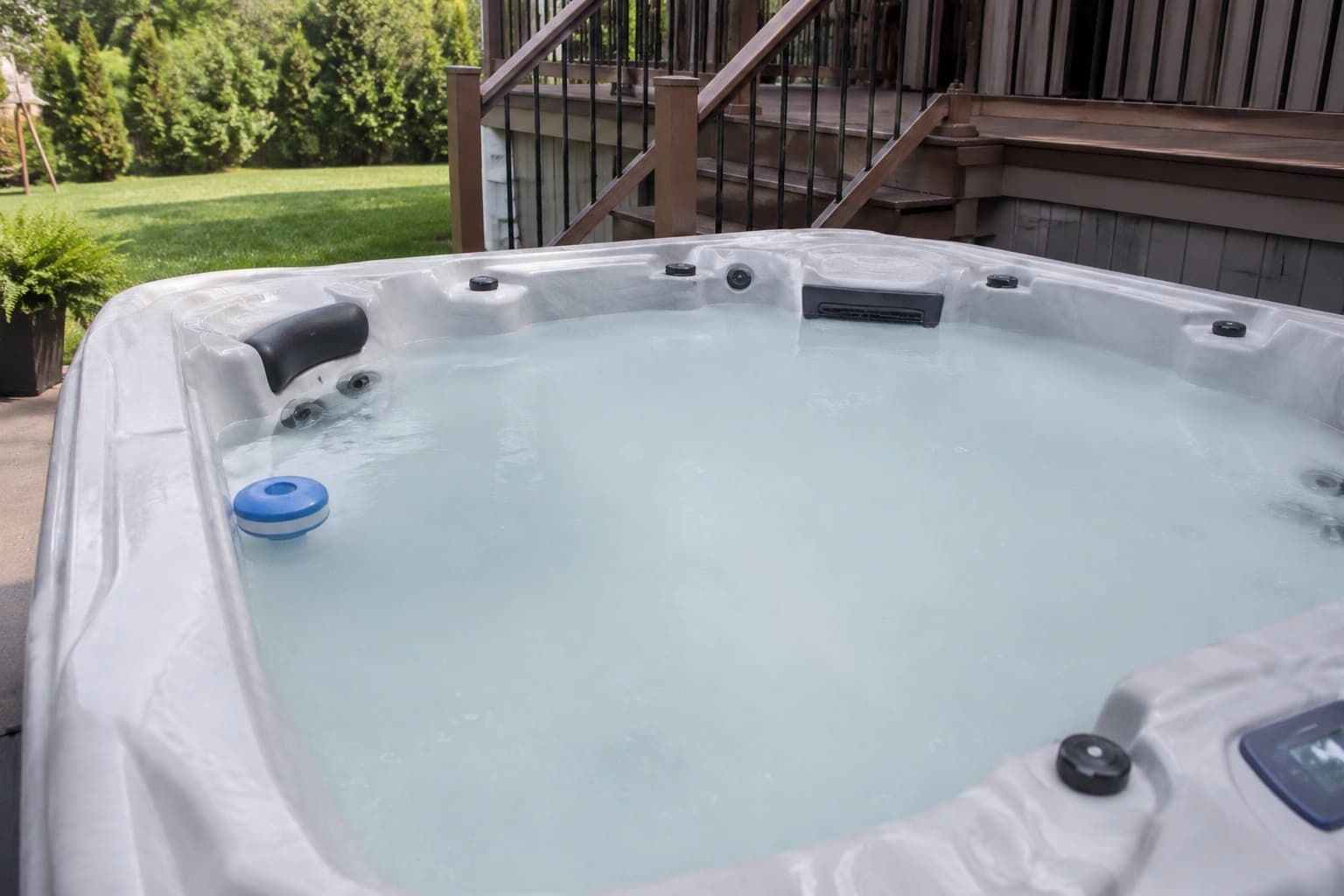
Quick Answer: Why Hot Tub Water Goes Cloudy
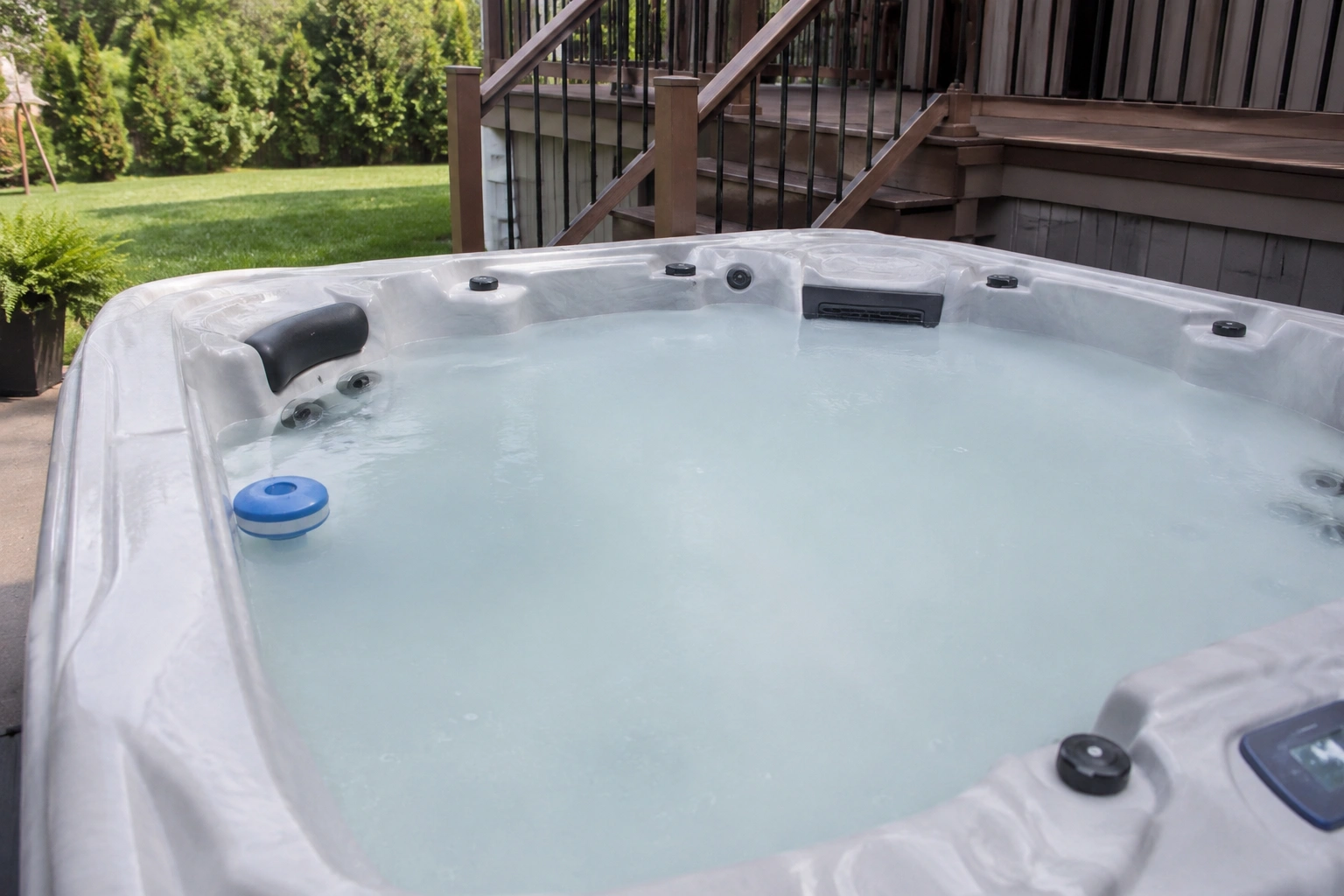
Cloudy hot tub water almost always traces to one of five causes: low or imbalanced sanitizer, pH or total alkalinity out of range, calcium hardness too high or too low, a dirty or compressed filter, or water that has simply reached the end of its life and needs a drain and refill. The reason cloudy water is frustrating is that the symptom looks the same regardless of which cause is behind it, and pouring more product at it without a diagnosis usually makes the chemistry harder to read.
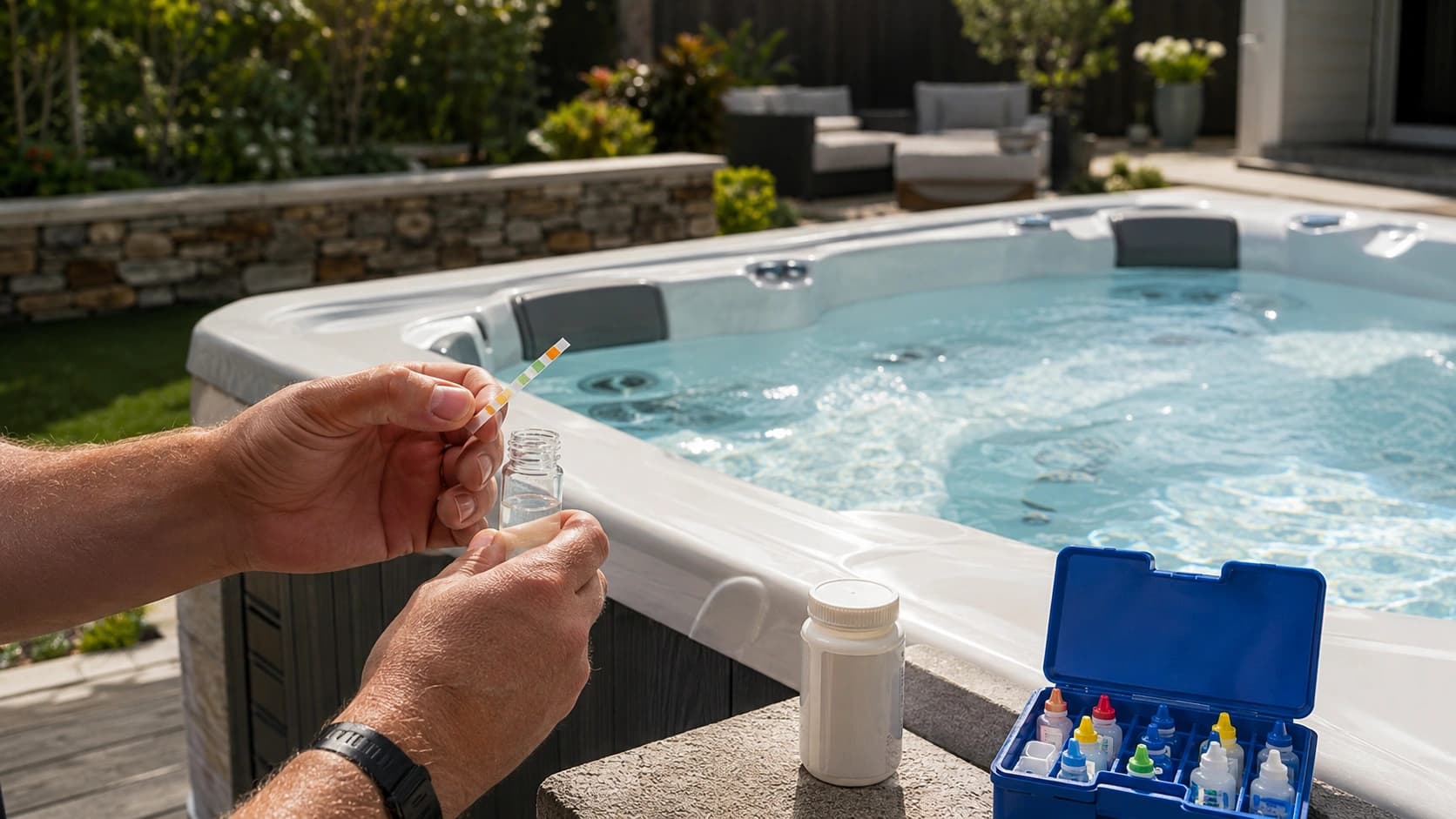
The correct first step is the same one we use on every visit: test the water before adjusting anything. Test strips or a liquid kit will tell you which of the five causes is actually in play. Once you know, dose only what is needed in small steps, with the pump running, following the label on the bottle in front of you. If you are not sure, bring a 500 ml water sample to our Hamilton showroom for a free in-store water test and we will walk through the readings in person.
5 causes
Sanitizer, pH, calcium, filters, old water
Test first
Do not guess with chemicals
One at a time
Never mix two products in the same cycle
Free
In-store water testing at our Hamilton showroom
Visit the Hamilton Showroom
1171 Upper James St Unit 9A, Hamilton. Walk in any time - no appointment needed. Free delivery across Hamilton and the GTA.
The Five Most Common Causes of Cloudy Hot Tub Water
Cloudy water is a symptom, not a diagnosis. Treating the symptom without finding the cause is how owners end up with a tub full of half-balanced chemistry that still will not clear. The five common causes, ranked by how often we see them at the Hamilton showroom counter:
- 1.Sanitizer issues. Low bromine or chlorine, combined sanitizer (chloramines or bromamines), or a sanitizer system that has drifted out of its working pH band.
- 2.pH or total alkalinity drift. When pH is high, calcium can precipitate out as cloudiness. When alkalinity is unstable, sanitizer becomes less effective.
- 3.Calcium hardness out of range. Too high causes scale-like haze; too low pulls calcium out of the heater element.
- 4.Filter loading or compression. A clogged or compressed filter cannot move debris out of the water, and no amount of chemistry will fix that on its own.
- 5.Aged water (high total dissolved solids). Every chemical you add over time leaves something behind. Once dissolved solids are high, water stops responding the way it used to and the only real fix is a drain and refill.
The rest of this guide walks through each cause in order, the right diagnostic sequence, and when the answer is to stop dosing entirely and reset the water. We do not publish exact dosing on this page; correct dosing depends on tub size, current readings, sanitizer system, and the specific bottle in your hand. Always read the product label.
Cause 1: Low or Imbalanced Sanitizer
The most common cause of cloudy hot tub water is sanitizer that is not where it needs to be. When bromine or chlorine drops below the working range, organic matter (sweat, oils, biofilm) accumulates faster than the sanitizer can keep up. The water reacts visibly: a slight haze first, then full cloudiness if it is left alone.
A related case is combined sanitizer. Even when sanitizer reads in range, the chemistry can be tied up in spent compounds (chloramines in chlorine systems, bromamines in bromine systems) that no longer kill effectively. The water can show low free sanitizer with high total sanitizer, which is exactly when a shock cycle is the right move (covered in section 9 below).
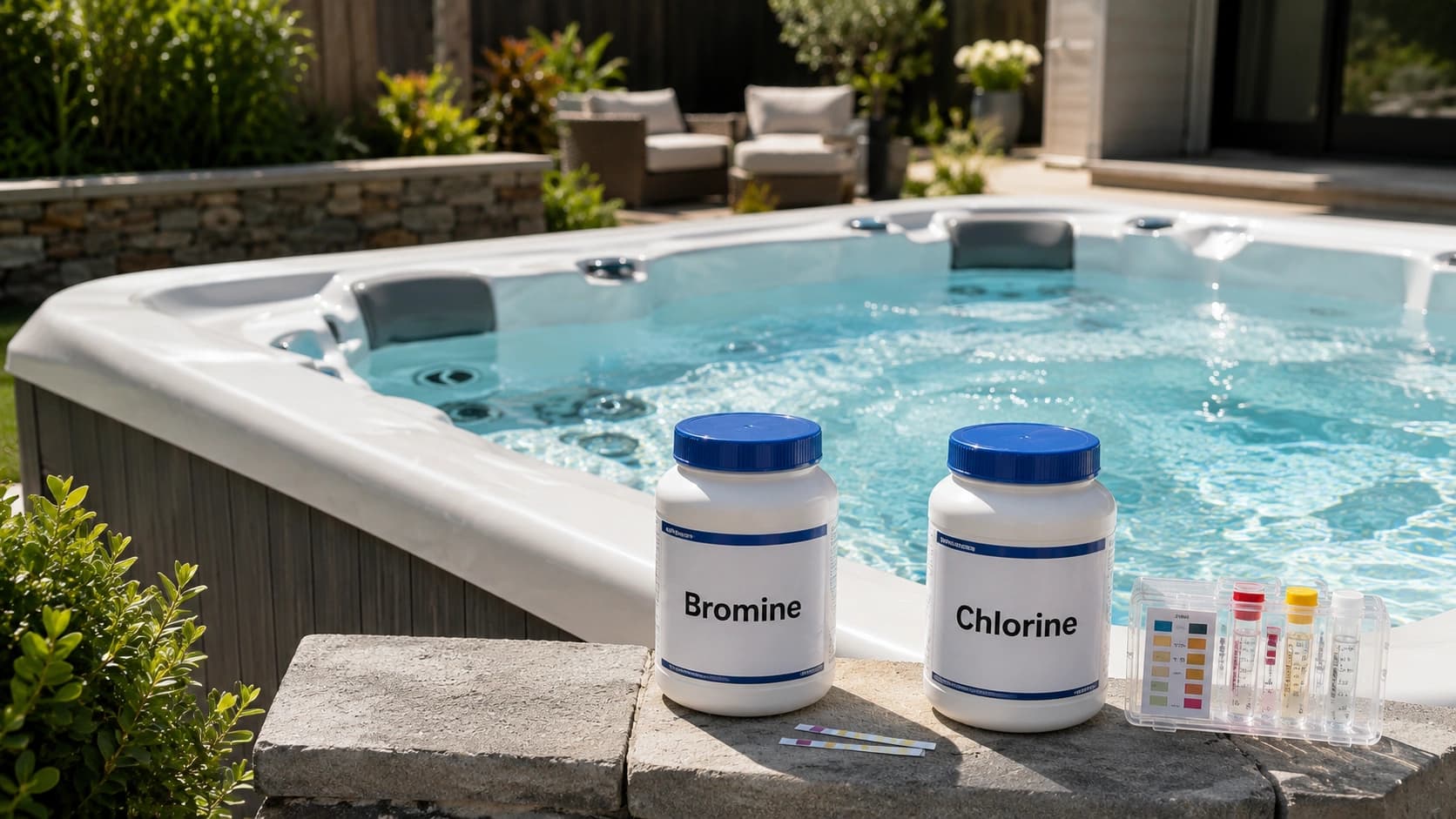
For the underlying choice between systems, our bromine vs chlorine hot tub guide covers when each one fits a tub and how to switch safely. The short rule for a cloudy water diagnosis is: read the sanitizer level first, decide between a top-up and a shock based on what the test shows, and never combine sanitizer and shock additions in the same dosing cycle. Each goes in by itself with the pump running, with retesting in between.
Cause 2: pH or Total Alkalinity Out of Range
Sanitizer cannot do its job when pH and alkalinity are out of range, and high pH on its own can cause cloudiness even with sanitizer in spec. Calcium becomes less soluble as pH climbs, which shows up as a faint white haze in the water. On the other end, low alkalinity destabilizes pH so badly that you may dose pH up, hit target briefly, and find the reading drifting again hours later.
The right approach is the same one we follow on every service visit: alkalinity first, then pH, then sanitizer. Adjust in small label-controlled steps with the pump running. Wait the time the bottle specifies. Retest. If the readings are still off after one careful round, stop and reassess rather than dosing again.
For the deeper alkalinity and pH walk-through, see our hot tub water chemistry guide. It covers how to lower alkalinity in hot tub water, how to raise pH in hot tub water without overshooting, the order chemicals go in, and why getting alkalinity stable is the single biggest lever for predictable hot tub chemistry. We do not repeat the dosing details here because hot tub chemistry deserves its own guide rather than a paragraph buried in a cloudy water post.
Cause 3: Calcium Hardness Too High or Too Low
Calcium hardness is the amount of dissolved calcium in the water, and it has two failure modes that both look like cloudiness.
Too high. Calcium precipitates out as scale-like haze on the surface and as deposits on jets, the heater element, and the shell. The water can look milky white, especially after a soak when temperatures are at their highest. The fix is usually to drain a portion of the water and refill with softer source water, then rebalance.
Too low. Soft water aggressively pulls calcium out of the heater element and other metal components, which over time causes corrosion and equipment wear. The cloudiness in this case is usually a fine haze plus visible signs of equipment stress (pitting on metal fittings, faster heater element wear). The fix is a calcium hardness increaser product, dosed per the bottle label, with the pump running.
We avoid publishing target ranges for specific tubs because the right calcium hardness depends on your tub manufacturer recommendations and the source water you are filling with. The general workflow is the same as every other adjustment: test first, dose per the label in small steps, retest. We carry calcium hardness increaser at our chemicals section. If your readings keep drifting, our maintenance service can do a full visit and figure out whether the issue is the dosing routine or the source water itself.
Cause 4: A Dirty or Compressed Filter
Filtration is the second half of clean water. Even perfect chemistry cannot stay perfect if the filter cannot pull debris out of circulation. A loaded filter shows up as cloudy water that does not respond to chemical adjustments, slower jet pressure, and longer cycle times for the heater to hold temperature. Filters fail in three ways:
- Loaded with debris. The pleats are physically clogged. A rinse and a soak in hot tub filter cleaner usually restores function.
- Compressed pleats. The pleats have lost their structure from too many wash cycles or extended use. The filter still looks clean but flows poorly. Replacement is the right call here, not another soak.
- Damaged. Tears, cracked end caps, or a separating core. Replace.
Hot tub filtration improves dramatically with a simple weekly rinse plus a monthly soak in filter cleaner plus quarterly deep cleaning. The single biggest cleanliness lever in a hot tub is a working filter, which is why we keep filter spray cleaner, soak solution, and replacement cartridges stocked alongside sanitizers at our chemicals section. If you are not sure which cartridge fits your tub, bring the spent filter to the showroom and we will match the fitment in person.
A filter coming back loaded within a few days of a clean is itself a diagnostic clue: bather load is unusually high, sanitizer is not keeping up, or the routine needs adjustment. That is when a maintenance service visit can pay back faster than another product purchase.
Cause 5: Total Dissolved Solids and Time for a Drain
Every product you add and every soak leaves something behind in the water. Over months, total dissolved solids climb. Once they are high enough, water simply stops responding the way it used to. You add alkalinity reducer and the reading barely shifts. You add sanitizer and it disappears within hours. Cloudy water that does not clear no matter what you dose is one of the classic symptoms of aged water.
For typical residential use (two to four people, three to four soaks per week), the standard cadence is to drain and refill every 3 to 4 months. Lighter use can stretch that, heavier use shortens it. We avoid quoting one schedule that fits every household because the right interval depends on bather load, soak frequency, water source, and how consistently the routine has been kept up. The signal that drain time has arrived is usually a combination of stubborn cloudiness, increasing chemical consumption, and readings that drift back out of range within days.
A drain and refill resets the chemistry. Drain fully, surface clean the shell, flush the plumbing lines per the product you use, refill, and start the opening chemistry round. Our maintenance service handles drain and refill as a single appointment, including the line flush and bring-up to operating temperature. We also stock drain and refill kits at the chemicals section if you prefer to handle the job yourself.
Visit the Hamilton Showroom
1171 Upper James St Unit 9A, Hamilton. Walk in any time - no appointment needed. Free delivery across Hamilton and the GTA.
The Right Order to Diagnose Cloudy Hot Tub Water
Searching online for hot tub cloudy water or cloudy water in hot tub returns dozens of forum threads, most contradicting each other. The temptation is to skim a thread and add something. Resist that, and run through the diagnosis sequence first.
- 1.Test the water. Strips or liquid kit. Read sanitizer, pH, alkalinity, and (if your kit supports it) calcium hardness.
- 2.Check the filter. Pull it, inspect, rinse. If the pleats are heavily fouled or compressed, that is likely your cause. A clean or replacement filter alone solves a meaningful share of cloudy water cases.
- 3.Adjust alkalinity if it is out of range. Dose per the bottle label, with the pump running, in small steps. Wait the label-specified circulation time. Retest.
- 4.Adjust pH if it is out of range. Same workflow.
- 5.Adjust sanitizer if it is out of range. Same workflow. If sanitizer is in range but the water is still cloudy, consider a shock cycle (next section).
- 6.Adjust calcium hardness if needed. Usually only after a fresh fill or if readings have drifted significantly.
- 7.Consider a drain and refill if everything else has been ruled out. Total dissolved solids may be the actual cause.
The rule that applies through every step: one product at a time, with the pump running on circulation, with time between additions for a full retest. Never combine two chemicals in the same scoop or dose two products in the same cycle. Hot tub chemistry only works when the system has time to react and you have time to read what changed. If two rounds of careful adjustments have not cleared the water, stop adding and bring a sample to the Hamilton showroom for a free in-store test before doing anything else.
Hot Tub Shock: When and How It Helps Clear the Water
Hot tub shock is one of the more useful tools for clearing cloudy water, but it is not a universal fix. Shock works by oxidizing combined sanitizer and organic matter, which is what causes that lingering haze and stale smell when bather load has been high. Two main shock types are used in residential spas:
- Non-chlorine shock (potassium monopersulfate, MPS). Compatible with both bromine and chlorine systems. Most owners reach for this for routine weekly shock and for cloudy water cases where the cause is bather load rather than chemistry drift.
- Chlorine shock (dichlor). Adds chlorine plus oxidation. Used in chlorine systems primarily; compatible with bromine systems only when the product label specifically allows it.
When shock is the right move: the water is cloudy after a party or heavy soak, sanitizer reads low or combined, and pH and alkalinity are roughly in range. When shock is not the right move: pH or alkalinity is way off (fix those first), the filter is heavily fouled (clean it first), or the water is reaching the end of its life (drain instead).
Add shock with the pump running, on its own cycle, with the cover off until the product label specifies otherwise. Never combine shock with another chemical in the same cycle. Follow the label on the bottle in front of you because brands and concentrations vary. We stock both shock types at our chemicals section.
Clarifiers and Specialty Treatments: Use With Care
Hot tub chemicals include a category of clarifiers and specialty treatments designed to address specific symptoms: clarifier for cloudy water, flocculant to drop suspended particles to the bottom for vacuuming, foam reducer for surface foam, metal sequestrant for staining. These products can help when used correctly, but they are not a substitute for solving the underlying cause.
A clarifier coagulates very small particles into larger ones that the filter can catch, which means the filter must be working for clarifier to do its job. Throwing clarifier into water with a clogged filter often makes things worse rather than better. Flocculant settles particles to the bottom and assumes you can vacuum them out before they redissolve. If you cannot vacuum, the flocculant work undoes itself within hours.
A practical approach: solve the underlying cause first (sanitizer in range, pH and alkalinity balanced, filter clean), then use a clarifier or flocculant only if the water is still slightly hazy after the chemistry is right. We carry clarifiers, flocculants, foam reducers, and metal sequestrants at our chemicals section. Always follow the bottle label for the specific product you have because dose rates and contact times differ between brands.
When the Cause Is Not Chemistry
Adding more product cannot fix a hardware problem. A handful of mechanical issues create symptoms that look like cloudy water but trace back to something other than the chemistry routine.
- A failing pump. Reduced circulation means filter and chemistry both struggle. Symptoms include lower jet pressure, longer heat-up cycles, and water that goes cloudy faster than usual between visits.
- Clogged jets or plumbing. Reduced flow has the same effect. Sometimes you can hear it (uneven jet output, gurgling), sometimes you only see the chemistry consequences.
- Heater or flow sensor faults. Recurring error codes, GFCI trips, or a heater that takes much longer than usual to reach temperature can indirectly cause cloudy water by interrupting the cycle the system needs to circulate and filter properly.
- Damaged or saturated cover. A torn or waterlogged cover lets debris fall into the tub and lets sanitizer off-gas faster, both of which feed cloudiness.
- Cracked or separating filter housing. Lets unfiltered water bypass the cartridge.
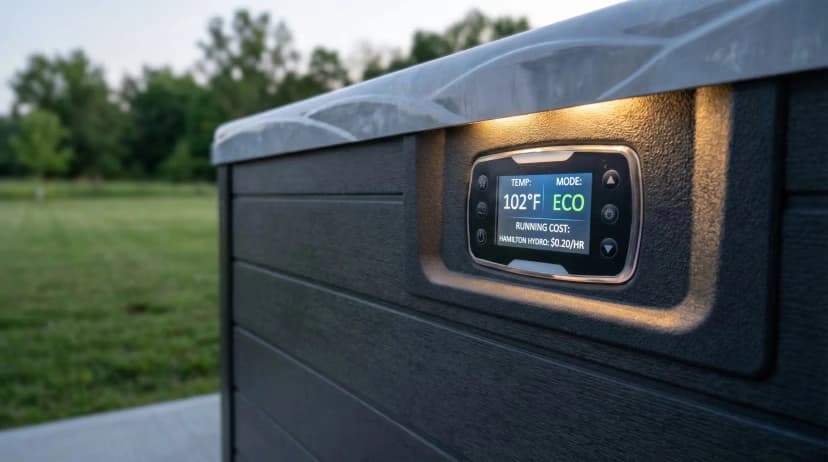
If chemistry has been ruled out and the symptoms still come back, see our repair service for a diagnostic visit. Hardware faults need to be fixed, not dosed around. The Hamilton hydro running cost guide also covers the energy side, which can be a useful early signal: a tub that is suddenly costing more to run is sometimes a tub with a developing hardware issue.
How to Clean a Hot Tub Filter
Filter care is the single biggest cleanliness lever in a hot tub, and most owners under-clean their filter. A practical routine that extends cartridge life and keeps water clear:
Weekly: Pull the filter, hose-rinse the pleats from the inside out to push debris back out the way it came in. Spray-on filter cleaner is the easy upgrade if you have time; spray, wait the label-specified time, then rinse.
Monthly: Spray-clean with hot tub filter cleaner per the label. The product breaks down body oils and lotion residue that water alone will not move.
Quarterly: Soak the filter overnight in filter soak solution per the bottle label, then rinse thoroughly. The deep soak loosens the embedded organics that build up over time.
Replace when: The pleats are visibly compressed, frayed, torn, or no longer responding to a soak. A new cartridge restores flow that no amount of cleaning can recover.
Never use household detergents on a hot tub filter. The residue foams in the spa and is hard to flush out. Use products designed for spa filters; we keep them stocked at the chemicals section along with replacement cartridges for the brands we sell most often. Bring the spent filter to the showroom if you are not sure which fitment matches your tub.
Visit the Hamilton Showroom
1171 Upper James St Unit 9A, Hamilton. Walk in any time - no appointment needed. Free delivery across Hamilton and the GTA.
When to Stop Guessing and Bring Us a Water Sample
Free in-store water testing is the easiest way to settle a cloudy water question without buying more product on guesswork. Bring a 500 ml sample of your tub water (drawn from elbow-depth, not from the surface) in any clean container to our Hamilton showroom. We run a multi-panel test, print the readings, and walk you through what to add and in what order. The visit takes a few minutes, no appointment, no purchase required.
Good times to bring in a sample:
- Cloudy water has not responded to one careful round of chemistry adjustments
- Sanitizer keeps dropping out of range no matter how often you dose
- Readings on your home test strips look inconsistent and you want a sanity check
- After a drain and refill to confirm opening chemistry before starting routine sanitizer dosing
- Once a month as a baseline against home testing
If you are mostly DIY and want supplies to handle the routine, the chemicals section covers what you need at the showroom counter. If you would rather have someone else handle it, our maintenance service does the full visit including water testing, balancing, filter care, and a written report. New owner not sure where to start? Browse the main FAQ for broader hot tub questions or check our hot tub water chemistry guide for the underlying chemistry. The local advantage is real: a Hamilton showroom on Upper James St means the gap between a confusing reading and the right product is short, not weeks of trial and error.
Frequently Asked Questions
Why is my hot tub water cloudy?
Cloudy hot tub water almost always traces to one of five causes: low or imbalanced sanitizer, pH or total alkalinity out of range, calcium hardness too high or too low, a dirty or compressed filter, or aged water with high total dissolved solids. Test the water first to identify which one is in play, then dose only what is needed in small steps following the bottle label. Bring a 500 ml sample to our Hamilton showroom for a free in-store test if the cause is not obvious.
How long does it take for cloudy hot tub water to clear?
Most cloudy water cases clear within 24 to 48 hours once the right product is in and the filter is moving water properly. Cases driven by aged water (high total dissolved solids) usually do not clear without a drain and refill, no matter how much product you add. If chemistry adjustments and a clean filter have not cleared the water within two days, the answer is usually a fresh fill, not more chemicals.
Will hot tub shock fix cloudy water?
Sometimes, but not always. Shock works when cloudy water is driven by bather load and combined sanitizer (chloramines or bromamines). It does not fix cloudy water caused by pH drift, alkalinity out of range, a clogged filter, or aged water. Diagnose first; shock only when the chemistry is roughly right and the water still has that lingering haze and stale smell after heavy use. Follow the bottle label, add with the pump running, and never combine shock with another product in the same cycle.
Should I drain my hot tub if the water is cloudy?
Drain when cloudy water has not responded to careful chemistry adjustments and a clean filter, when readings keep drifting back out of range no matter what you dose, or when total dissolved solids are climbing. For typical residential use, a full drain and refill every 3 to 4 months is the standard cadence. Lighter use can stretch that. Heavier use shortens it. Our maintenance service can handle drain and refill as a single appointment if you would rather not do it yourself.
Can a dirty filter cause cloudy hot tub water?
Yes, and it is one of the most common causes. A clogged or compressed filter cannot move debris out of circulation, and no chemistry adjustment will overcome that on its own. Pull the filter, rinse it, and consider a soak in hot tub filter cleaner. If the pleats are compressed, frayed, or no longer responding to a soak, replace the cartridge. We stock filter cleaner, soak solution, and replacement cartridges at our chemicals section.
Does calcium hardness cause cloudy hot tub water?
Yes. Calcium hardness too high causes scale-like haze and deposits on jets and the shell. Calcium hardness too low pulls calcium out of the heater element and other metal components, which can cause a fine haze plus equipment wear. The fix in either direction is a label-controlled adjustment with a calcium hardness product or a partial drain and refill, depending on the reading. Test first, dose per the bottle, retest.
Why is my hot tub water cloudy after a fresh refill?
A short cloudy phase right after a refill is normal, especially when source water has high mineral content. The opening chemistry round (alkalinity first, then pH, then sanitizer) usually clears it within a day or two. Persistent cloudiness after a fresh fill points to source water minerals, an under-cleaned shell or filter from before the refill, or chemistry adjustments made out of order. Bring a sample to our Hamilton showroom if it does not clear within a couple of days.
Why did my hot tub water go cloudy after I shocked it?
Brief cloudiness right after a shock cycle is common because shock oxidizes organic matter, which becomes visible suspended particles before the filter catches them. The water usually clears within several hours of running circulation through a clean filter. If the cloudiness lingers, the filter may be loaded, pH or alkalinity may have been out of range during the shock, or you may have used a shock product that is not compatible with your sanitizer system. Read the bottle label and verify compatibility.
Is cloudy hot tub water safe to soak in?
It depends on what is causing it. If sanitizer is in range and the cause is mild calcium haze, a clogged filter, or recent shock, the immediate health risk is generally low, though we still recommend solving the cause before soaking. If sanitizer is unknown, low, or out of range, do not soak until the water has been tested and balanced. Cloudy water with low sanitizer can mean bacteria are not being controlled. We are not making medical claims here. When in doubt, bring a sample to our showroom for a free in-store test before getting in.
Where can I buy hot tub filter cleaner and clarifier in Hamilton?
We stock hot tub filter cleaner (spray and soak), replacement filter cartridges for the brands we sell most often, clarifiers, flocculants, foam reducers, metal sequestrants, and the full sanitizer and balancer lineup at our Hamilton showroom on Upper James St. Free in-store water testing comes with every visit. Chemical delivery is available on qualifying orders for Hamilton-area customers; call ahead to confirm stock and book a delivery window.
Hamilton's Authorized Maple Spas, DreamMaker & Platinum Spas Dealer
Hot Tubs Hamilton has been serving the Hamilton, Burlington, and GTA area since 2018. We are an authorized dealer for Maple Spas, DreamMaker, Platinum Spas, and Be Well, located at 1171 Upper James St Unit 9A, Hamilton. Read more about Hot Tubs Hamilton Team →
Visit the Hamilton Showroom
1171 Upper James St Unit 9A, Hamilton. Walk in any time - no appointment needed. Free delivery across Hamilton and the GTA.