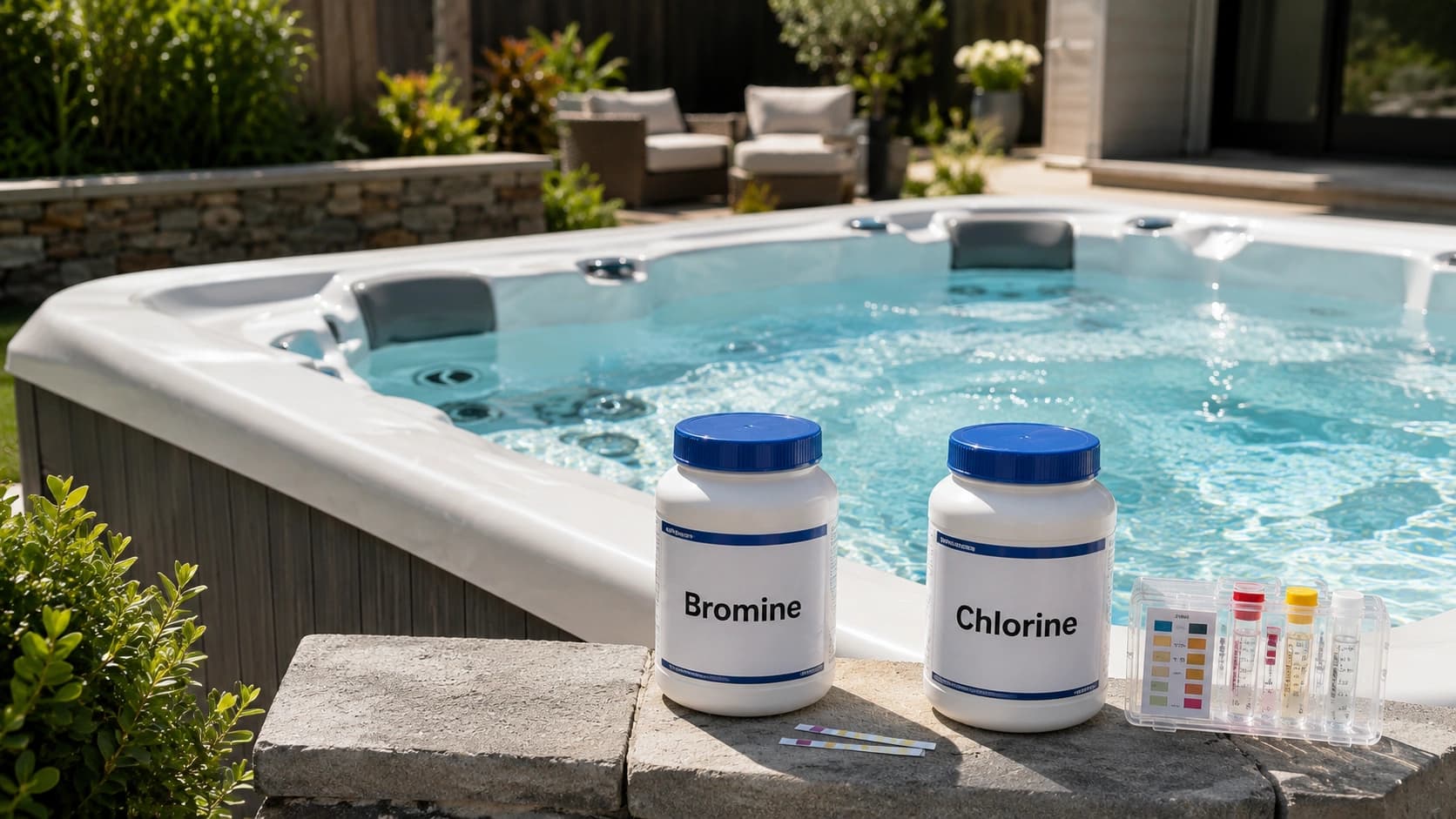
Quick Answer: Bromine vs Chlorine in a Hot Tub
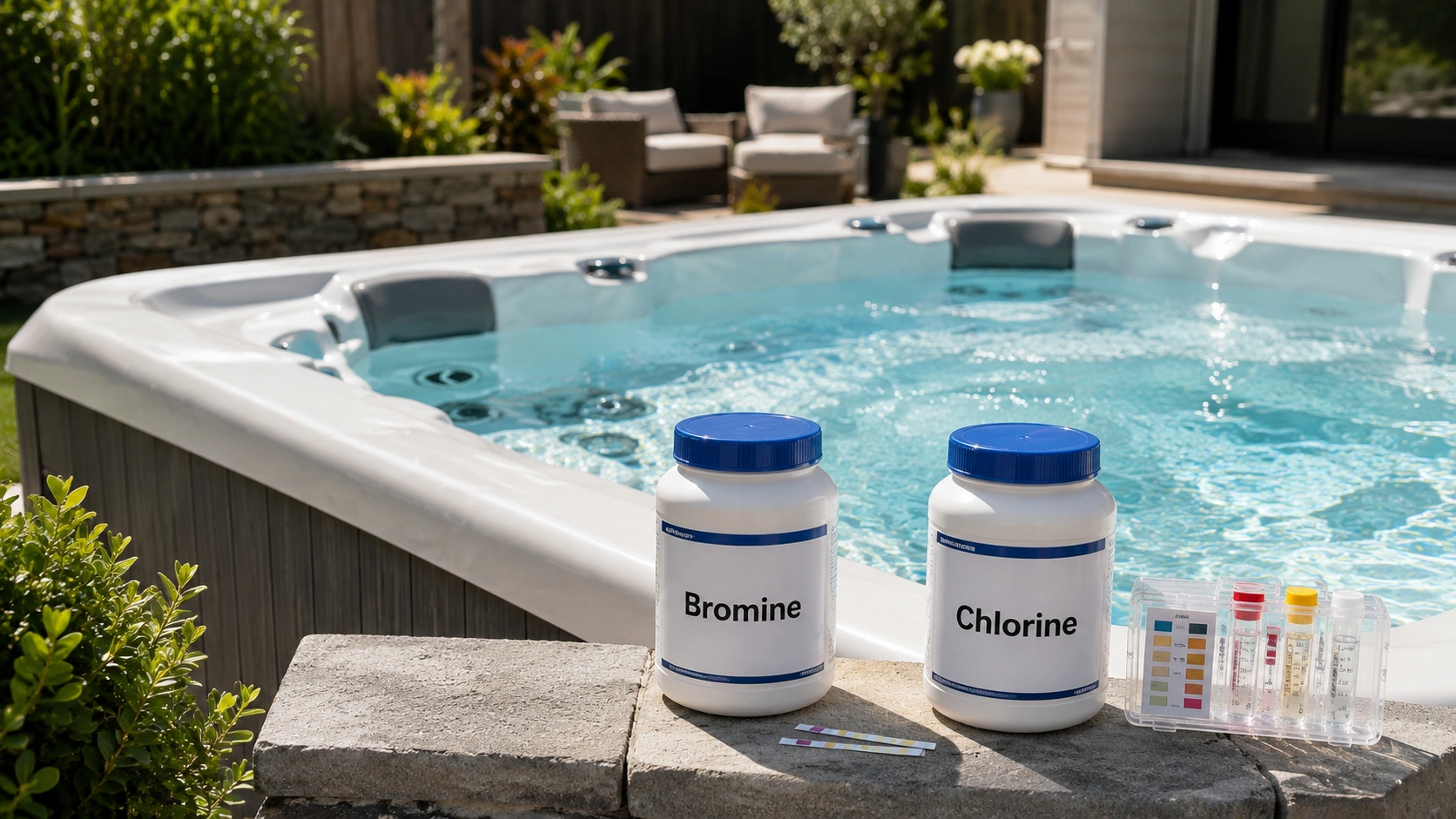
Bromine vs chlorine hot tub is one of the most common questions we get at the showroom, and the short version is honest: both work, and the right answer depends on how you use your spa. For most owners, bromine is the better default in a hot tub. It stays stable at hot tub operating temperatures (around 38 to 40 degrees Celsius), works across a wider pH band, and has a softer smell than chlorine. Chlorine still has a place: it acts faster, costs slightly less per dose for most owners, and is familiar to anyone who already runs a chlorine pool.
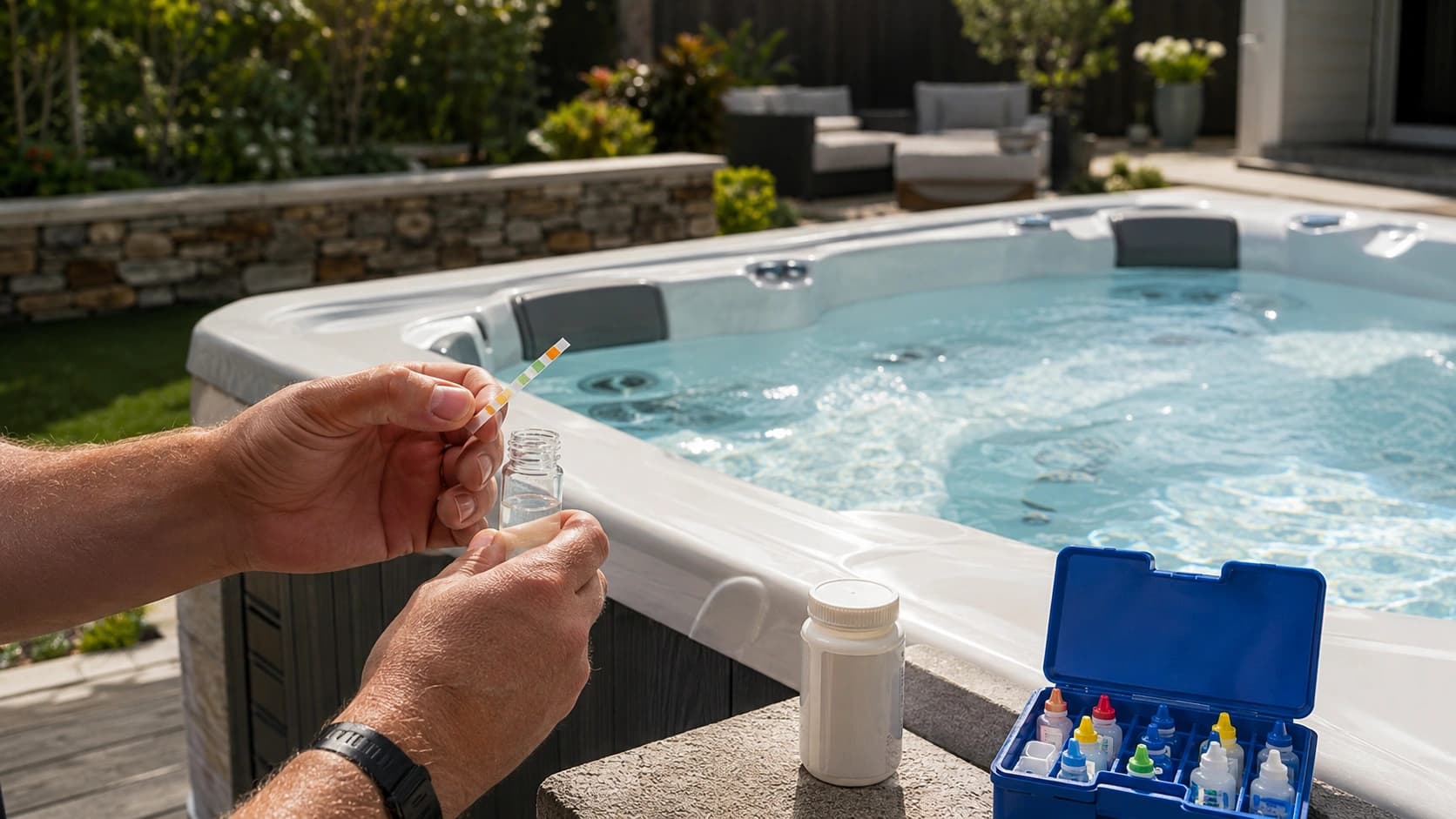
The deciding factors are how often you soak, how warm you keep the spa, whether anyone in the household is sensitive to chlorine smell, and which sanitizer system your tub is configured for. The full breakdown follows. Two non-negotiables apply to either path: test the water before you adjust anything, and follow the label on the actual product in front of you. If you are not sure which path fits your tub, bring a 500 ml sample to our Hamilton showroom for a free in-store water test and we will walk through it in person.
2 paths
Bromine or chlorine sanitizer systems
Test first
Never adjust sanitizer blindly
One at a time
Never mix two chemicals in the same cycle
Free
In-store water testing at our Hamilton showroom
Visit the Hamilton Showroom
1171 Upper James St Unit 9A, Hamilton. Walk in any time - no appointment needed. Free delivery across Hamilton and the GTA.
Why Hot Tub Sanitizer Is Not the Same as Pool Sanitizer
A hot tub is not a small pool. The chemistry behaves very differently and that is why pool habits often fail in a spa.
Hotter water. A spa runs at 38 to 40 degrees Celsius year-round. Heat accelerates the breakdown of chlorine, which is why a pool dose that lasts a week in cool water can vanish in a hot tub in under a day.
Smaller volume. A typical residential hot tub holds 1,500 to 2,000 litres. A backyard pool can hold 50,000 to 75,000 litres. The same dose of any chemical has roughly 30 times the impact in a spa, which is why eyeballing dosing in a hot tub is risky.
More bather load per litre. Two people in a 1,500 litre hot tub deposit far more sweat, oils, and organic matter per litre of water than the same two people in a pool. Sanitizer demand spikes accordingly.
Faster swings. Smaller volume and higher temperature means pH and sanitizer can drift in days rather than weeks. The fix is more frequent testing, not larger doses.
None of this means hot tubs are hard. It means the products and the routine are different. Spa-formulated sanitizers, balancers, and shock are built around these realities. Pool products are not.
How Bromine Works in a Hot Tub
Bromine is a halogen sanitizer, like chlorine, but with a different chemistry that suits heated water. The two ways to deliver bromine in a residential spa are tablets in a floating dispenser or in-line feeder, and granular bromine added directly with the pump running.
Bromine tablets for hot tubs dissolve slowly inside a dispenser as water flows past, releasing a steady level of sanitizer between visits. Granular bromine acts faster but needs more attention. Many owners run a hybrid: tablets for the baseline, granules for after a heavier soak.
In slightly more technical terms, bromine forms a bromine bank in the water, which is sanitizer reserve held ready to react with contaminants. When you shock a bromine system, the shock reactivates spent bromine in the bank rather than just adding fresh product. That is one of the reasons bromine routines feel steadier than chlorine routines once they are set up. We carry bromine tablets, granules, dispensers, and starter kits at our chemicals section. Always follow the label on the specific product you are using because brands and concentrations vary.
How Chlorine Works in a Hot Tub
Chlorine in a hot tub is most often delivered as dichlor granules, a stabilized form that dissolves quickly when added with the pump running. Chlorine reacts fast, kills a wider variety of contaminants on first contact, and is generally cheaper per dose than bromine for the same residential routine.
The trade-off is that chlorine breaks down quicker in heat. A dose that holds a sanitizer level for several days at pool temperatures can fade in 12 to 24 hours at hot tub temperatures. That means a chlorine routine in a spa typically requires more frequent testing and more frequent small additions, especially in heavy-use weeks. Chlorine is also more pH-sensitive than bromine; if your pH drifts above the target band, chlorine becomes much less effective and you may end up dosing more without solving the problem. Get the basics right (alkalinity and pH first, then sanitizer) and chlorine works well in a spa. Skip the basics and you will chase readings all week.
If chlorine is the path you are on, the same showroom-sample-then-dose workflow applies. We stock chlorine granules, dichlor shock, and start-up kits at our chemicals section. For the alkalinity and pH side of the puzzle, see our hot tub water chemistry guide.
Bromine vs Chlorine: Side-by-Side for Hot Tubs
A practical comparison, owner to owner, without made-up numbers:
- Stability in hot water. Bromine is more stable at spa temperatures. Chlorine breaks down faster.
- pH tolerance. Bromine remains effective across a wider pH band. Chlorine drops off quickly when pH drifts high.
- Smell. Bromine has a softer odour. Chlorine smell is sharper, especially when chloramines build up.
- Speed of kill. Chlorine reacts faster on initial contact. Bromine acts more steadily over time.
- Routine feel. Bromine routines tend to feel set-and-forget once dialled in. Chlorine routines need more frequent test-and-dose touches.
- Shock interaction. Both systems benefit from regular shock, but the products and reasoning differ (covered below).
- Cost considerations. Per dose, chlorine is generally cheaper. Bromine product can cost more upfront, though steadier dosing often offsets it across a season. We do not publish exact prices in this guide because they shift by brand, pack size, and quarter; ask at the showroom for current pricing on what you are buying.
- Skin and eye sensitivity. Some users prefer the feel of bromine water, especially if soaks are long. Others have no preference.
- Availability. Both are stocked at our chemicals section, along with the balancers, shock, and filter care that pair with them.
This is a comparison, not a verdict. Both work, with different routines.
When Bromine Is the Better Choice
Bromine tends to be the better fit when:
- You soak frequently (three or more times a week year-round). The steadier dosing curve handles ongoing demand without constant top-ups.
- You keep the water hot and the cover sealed often. Bromine holds up to heat better than chlorine.
- Anyone in the household is sensitive to the smell of chlorine. Bromine is softer.
- You want a more set-and-forget routine. Tablets in a dispenser plus a regular shock cycle is one of the simplest sanitizer paths in a hot tub.
- Your tub is configured or factory-recommended for bromine.
If you fall into most of these categories, bromine tablets for hot tubs are the natural starting point. Routine still requires testing two to three times per week and following the product label, but the day-to-day touchpoints are lighter than a chlorine routine for the same use level.
When Chlorine Is the Better Choice
Chlorine still makes sense when:
- You only use the spa occasionally (once a week or less) and prefer to dose fresh each time rather than maintain a tablet feed.
- You are already familiar with running a chlorine pool and want to reuse the same mental model.
- Your tub is factory-set for chlorine and the manufacturer recommends staying on that system.
- You prefer the speed of chlorine for after-party clean-up and are comfortable with more frequent testing.
Chlorine is not a worse path; it is a different one. The same fundamentals apply: test first, follow the bottle label, alkalinity and pH must be in range or sanitizer struggles. If you are running chlorine in a spa for the first time, expect to test more often than you would in a pool, especially in the first month while you learn how your tub holds chemistry.
Visit the Hamilton Showroom
1171 Upper James St Unit 9A, Hamilton. Walk in any time - no appointment needed. Free delivery across Hamilton and the GTA.
Bromine Tablets for Hot Tubs: Practical Notes
If you go the bromine path, a few practical notes from the showroom counter:
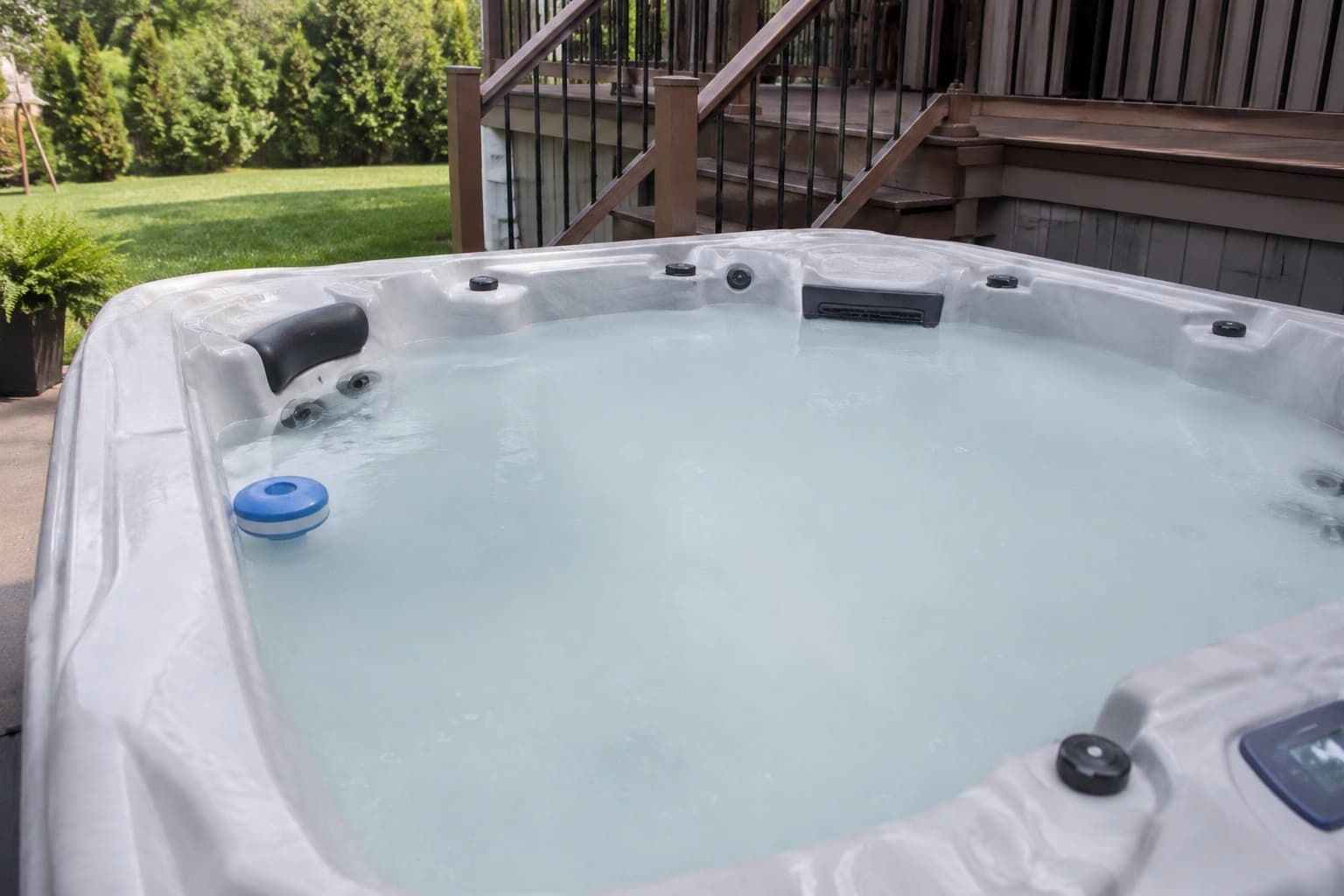
- Use a dispenser or in-line feeder rated for hot tubs. Floating dispensers are the most common and the simplest. In-line feeders are built into some spa plumbing systems for steadier delivery.
- Adjust the dispenser opening to match the manufacturer recommendation, not your gut. A wider opening dissolves tablets faster and overshoots the target sanitizer level.
- Do not let tablets sit on the spa shell. Direct contact between an undissolved tablet and the acrylic shell can cause bleaching or surface damage. Always use the dispenser.
- Pair tablets with periodic shock per the product label. Tablets keep the bank topped up; shock reactivates spent bromine and clears combined sanitizer.
- Do not casually mix bromine and chlorine systems. Adding chlorine tablets or chlorine shock to a bromine system can be done only when the product label explicitly says so. Some shock products are dual-compatible, others are not. Read the label every time.
- Ask at the showroom if you are switching systems. Coming from chlorine to bromine, or vice versa, is best handled with a drain and refill (covered below) rather than mixing the two in the same fill.
We carry bromine tablets, granules, dispensers, and starter kits at our chemicals section. Pricing and pack sizes are confirmed in person.
Hot Tub Shock: Where It Fits With Bromine or Chlorine
Hot tub shock is not a replacement for sanitizer. It is a periodic boost that does two jobs: clears combined sanitizer (chloramines or bromamines, the spent compounds that cause smell and reduced effectiveness) and oxidizes organic matter that the regular sanitizer cannot keep up with on its own.
Two main types of shock are used in residential spas:
- Non-chlorine shock (potassium monopersulfate, MPS). Compatible with both bromine and chlorine systems. Most owners reach for this for routine weekly shock because it is the safer default for either path.
- Chlorine shock (dichlor). Adds chlorine plus oxidation. Used in chlorine systems mostly. Compatible with bromine systems only when the product label specifically allows it (because dichlor regenerates the bromine bank in some product designs but not others).
Reach for shock after heavy bather load, after a party, when the water looks tired between drain-and-refills, or on the schedule the product label specifies. Add it with the pump running, with the cover off until the label says otherwise, and never combine shock with another chemical in the same cycle. We stock both shock types at our chemicals section, and we keep the dual-compatible MPS shock in stock for the bromine and chlorine households alike.
Can You Switch Between Bromine and Chlorine?
Yes, but not casually. The right way to switch sanitizer systems is to drain and refill, then start fresh on the new system. Trying to layer bromine onto a chlorine fill (or vice versa) without a drain leaves residual product behind that interferes with the new system, makes water chemistry harder to predict, and can shorten the new sanitizer's effective life.
A careful switch looks like this:
- 1.Plan the change for a normal drain-and-refill cycle (typical residential cadence is every 3 to 4 months anyway).
- 2.Run the spa down to the planned drain date, then drain fully and surface clean.
- 3.Refill, balance alkalinity and pH first, then start the new sanitizer system per the product label.
- 4.Test, dose in small steps, retest. Expect the first week to feel slightly different from your old system as you learn the new dosing rhythm.
If you are unsure whether your tub is configured for one system over the other, the spa manufacturer manual is the source of truth. If you do not have it, bring the model number to the Hamilton showroom and we will look it up. Our maintenance service can also handle the drain, refill, and switch as a single appointment if you would rather not do it yourself.
The Right Order to Add Hot Tub Chemicals
Whether you run a bromine hot tub or a chlorine hot tub, the order matters. Owners who get hot tub chemistry right at the order level have far fewer chemistry problems than owners who dose in random order.
- 1.Total alkalinity first. This is the buffer that keeps pH stable. Get it into the manufacturer-recommended range before anything else.
- 2.pH second. Adjust into the target band once alkalinity is settled.
- 3.Calcium hardness if needed. Usually only after a fresh fill.
- 4.Sanitizer last. Add bromine or chlorine to the level the product label specifies, with the pump running.
- 5.Shock as a separate step. On its own cycle, with the pump running, cover off until the label specifies otherwise.
The single most important rule covers all of the above: one product at a time, with the pump running on circulation, with time between additions to retest. Never combine two products in the same scoop or pour two chemicals in the same cycle. Each goes in by itself. For the alkalinity and pH side in detail, see our hot tub water chemistry guide. For the supply side, the chemicals section carries the full set.
When Sanitizer Is Not the Real Problem
Adding more sanitizer does not fix every water issue. A few common symptoms that look like sanitizer problems but usually are not:
- Cloudy water that does not respond to a sanitizer top-up. Often a clogged filter, calcium hardness too high, or alkalinity drift rather than a true sanitizer shortage. The order to investigate is filter, balancers, then sanitizer; our cloudy hot tub water guide covers the full diagnosis sequence.
- Strong smell even with sanitizer in range. Often combined sanitizer (chloramines or bromamines) that needs a shock cycle, not more bromine or chlorine.
- Scale on jets and shell. Calcium hardness too high or pH drifting high. Sanitizer is innocent; the balancers are out.
- Poor circulation. Dirty filter, clogged jets, or a failing pump. Test the water by all means, but if the symptoms persist with balanced chemistry, the issue is hardware.
- Recurring readings drifting back out of range. Total dissolved solids may be high; the answer is a drain and refill, not more chemicals.
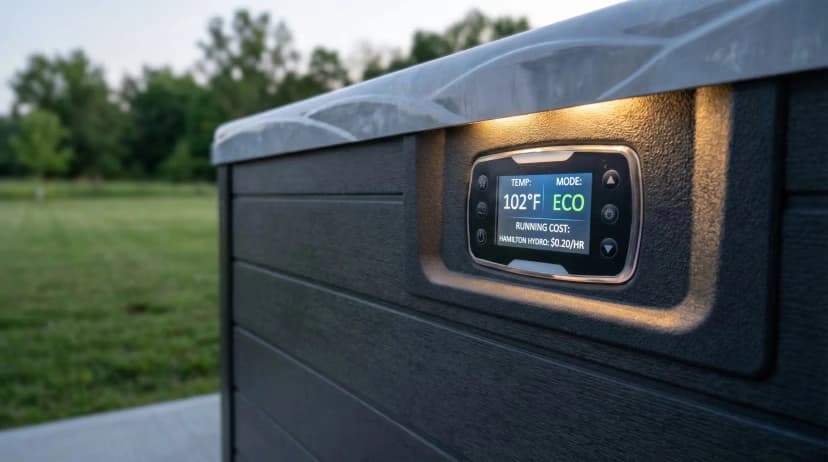
If the routine is not catching up no matter what you add, our maintenance service can do a full visit and figure out what the routine is missing. If the problem is mechanical (recurring error codes, leaks, GFCI trips, low jet pressure), see our repair service. Chemistry alone will not solve a hardware fault. The Hamilton hydro running cost guide covers the energy side if a tired heater or pump is part of the picture.
Visit the Hamilton Showroom
1171 Upper James St Unit 9A, Hamilton. Walk in any time - no appointment needed. Free delivery across Hamilton and the GTA.
When to Stop Guessing and Bring Us a Water Sample
Free in-store water testing is the easiest way to settle a sanitizer question without trial and error. Bring a 500 ml sample of your tub water (drawn from elbow-depth, not from the surface) in any clean container to our Hamilton showroom. We run a multi-panel test (pH, total alkalinity, sanitizer level, calcium hardness, and stabilizer where relevant), print the readings, and walk you through what to add and in what order. The visit takes a few minutes, no appointment, no purchase required.
Good times to bring a sample:
- Choosing between bromine and chlorine for the first time and want a recommendation matched to your water source
- Switching sanitizer systems and want a baseline reading after the drain and refill
- Sanitizer levels keep dropping and you cannot figure out why
- The routine has drifted and you want a sanity check before buying more product
- Once a month as a check against your home test strips, which can drift if stored in heat or humidity
If you are mostly DIY, the chemicals section covers what you need at the showroom counter. If you would rather have someone else handle the routine, our maintenance service does the full visit including water testing, balancing, filter care, and a written report. New owner not sure where to start? Browse the hot tub buying guide or check the main FAQ for broader hot tub questions.
Frequently Asked Questions
Bromine vs chlorine hot tub: which is better?
For most hot tub owners, bromine is the better default because it stays stable at hot tub operating temperatures and remains effective across a wider pH band than chlorine. Chlorine still works well when the routine is consistent and pH stays in range. The right answer depends on how often you soak, how sensitive you are to sanitizer smell, and which system your tub is configured for. Both are valid; both are stocked at our chemicals section.
Should I use bromine or chlorine for hot tubs?
Start with bromine if you soak frequently, keep water hot year-round, prefer a softer smell, and want a steadier dosing routine. Start with chlorine if you soak occasionally, are already comfortable running a chlorine routine, or your tub is factory-recommended for chlorine. The decision is not permanent. You can switch systems at a normal drain and refill cycle. Bring your tub model and a water sample to our Hamilton showroom and we will walk through which fits your situation.
Do bromine tablets work well in hot tubs?
Yes, bromine tablets for hot tubs are one of the most popular sanitizer paths because they release sanitizer slowly into the water through a dispenser or in-line feeder, holding a steady level between visits. Always use a dispenser; never let an undissolved tablet sit directly on the spa shell. Set the dispenser opening per the manufacturer instructions, not by guess. Pair tablets with periodic shock per the product label.
Can I switch from chlorine to bromine in a hot tub?
Yes, but the safe way is to drain and refill the spa before starting the new sanitizer. Trying to layer bromine onto a chlorine fill leaves residual product behind that makes the new chemistry hard to predict. Plan the switch for a normal drain and refill cycle (typically every 3 to 4 months). Refill, balance alkalinity and pH, then start the new sanitizer per the product label. Bring the model number to our showroom if you want a recommendation specific to your tub.
Can I mix bromine and chlorine in my hot tub?
Not casually. Some shock products are dual-compatible with both bromine and chlorine systems, but adding chlorine tablets to a bromine system or vice versa without checking the product label can cause unpredictable chemistry. The safe rule is one sanitizer system per fill, and never combine two products in the same dosing cycle. Read every product label. If you are unsure, bring the bottle and a water sample to our showroom and we will confirm compatibility before you dose.
What is hot tub shock used for?
Hot tub shock clears combined sanitizer (chloramines or bromamines, the spent compounds that cause smell and reduce effectiveness) and oxidizes organic matter that regular sanitizer cannot keep up with. Reach for it after heavy bather use, after a party, when the water looks tired between drain-and-refills, or on the schedule the product label specifies. Non-chlorine MPS shock is compatible with both bromine and chlorine systems. Always add with the pump running, on its own cycle, with the cover off until the label says otherwise.
Why does my hot tub still smell strong with sanitizer?
A strong smell with sanitizer in range is usually combined sanitizer (chloramines in chlorine systems, bromamines in bromine systems) rather than too much sanitizer. The fix is a shock cycle to break the combined compounds, not more bromine or chlorine. If the smell persists after a shock, bring a 500 ml water sample to our Hamilton showroom for free in-store testing. Sometimes the underlying cause is pH or alkalinity drift that has been making sanitizer less effective.
Is cloudy water always a sanitizer problem?
No. Cloudy water can come from low or imbalanced sanitizer, but it is just as often a clogged filter, calcium hardness too high, alkalinity drift, or total dissolved solids climbing toward a drain-and-refill point. Test the water first. If sanitizer is in range and the water is still cloudy, the next things to check are the filter and the balancers. Bring a sample to our showroom if you cannot pinpoint the cause.
How often should I test bromine or chlorine levels?
Two to three times per week is the minimum, more during heavy use periods or after parties. The gold standard is a quick test before every soak. Test strips take about 60 seconds. A monthly free in-store water test at our Hamilton showroom is a good sanity check against home strips, which can drift if stored in heat or humidity.
Where can I buy bromine tablets for hot tubs in Hamilton?
We stock bromine tablets, bromine granules, dispensers, in-line feeder cartridges, chlorine granules, dichlor and MPS shock, and matching balancers at our Hamilton showroom on Upper James St. Free in-store water testing comes with every visit. Chemical delivery is available on qualifying orders for Hamilton-area customers; call ahead to confirm stock and book a delivery window.
Hamilton's Authorized Maple Spas, DreamMaker & Platinum Spas Dealer
Hot Tubs Hamilton has been serving the Hamilton, Burlington, and GTA area since 2018. We are an authorized dealer for Maple Spas, DreamMaker, Platinum Spas, and Be Well, located at 1171 Upper James St Unit 9A, Hamilton. Read more about Hot Tubs Hamilton Team →
Visit the Hamilton Showroom
1171 Upper James St Unit 9A, Hamilton. Walk in any time - no appointment needed. Free delivery across Hamilton and the GTA.